
Transforming Attendance Monitoring at Queen Mary University of London’s (QMUL) Institute of Dentistry (IoD)
Overview
Queen Mary University of London’s (QMUL) Institute of Dentistry (IoD), part of a Russell Group university and based within the state‑of‑the‑art Royal London Dental Hospital, delivers large‑scale undergraduate, postgraduate, and clinical programmes across multiple sites. With thousands of students, hundreds of subjects, and a complex timetable spanning clinical, simulation, laboratory, and online teaching, QMUL IoD required a modern, fraud‑proof, and scalable attendance system.
CATQR — already embedded across Barts Health and used by approximately 25,000 staff, with QMUL as the Trust’s academic partner — emerged as the natural and proven choice. Its position is reinforced by consistently excellent feedback from staff across the Trust’s hospital sites, including the world‑renowned St Bartholomew’s Hospital and The Royal London Hospital.
1. Origin of QMUL IoD’s Interest in CATQR
COVID‑19 Operational Exposure
In spring 2021, Dr Dominic Hurst (Senior Clinical Lecturer and Academic Lead for Student Support) was supporting the COVID‑19 response at The Royal London Hospital. He used CATQR to ensure QMUL dental students:
- scanned in using the CATQR mobile app
- collected their lateral flow testing kits
- met testing requirements before clinical duties
This gave Dominic first‑hand experience of CATQR’s reliability in a high‑pressure, safety‑critical environment.
Initial Enquiry
Seeing CATQR’s potential for QMUL’s IoD, Dominic approached Barts Health’s Deputy Director of Education & Quality (Medical & Dental) to identify who held responsibility for the platform. He was promptly directed to the designated custodian within Barts Health. This exchange established the formal starting point for QMUL IoD’s exploration of CATQR.
2. Why QMUL IoD Needed CATQR
Complex Timetabling Across Multiple Programmes
This created a scale and complexity far beyond typical NHS educational environments.
Key Requirements
QMUL IoD needed a system that could:
- prevent fraudulent attendance
- handle thousands of classes per month
- integrate with the University’s data warehouse
- support both on‑campus and online teaching
- provide audit‑ready evidence for regulatory bodies (including UK Visas and Immigration)
- remain simple for educators to use
CATQR’s architecture aligned directly with these needs.
3. Dynamic Class QR Code — The Feature That Attracted QMUL IoD
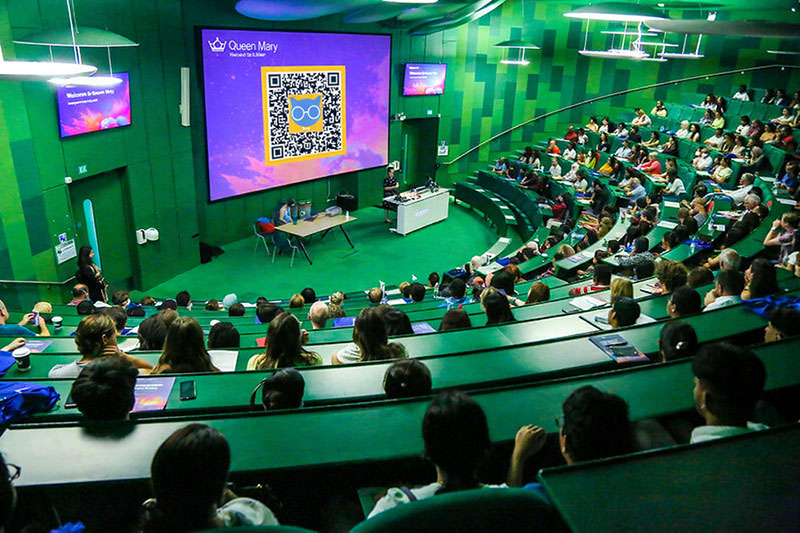
QMUL IoD was particularly interested in CATQR’s Dynamic Class QR Code, which:
- changes every few seconds
- prevents screenshots or forwarded images
- ensures only students physically present can register
- provides real‑time, fraud‑proof attendance data
This feature addressed QMUL IoD’s concerns around professionalism, clinical safety, and data integrity.

“CATQR has transformed how we monitor attendance across a large, complex dental school delivering clinical, laboratory, and online teaching. What stands out most is the combination of scalability, flexibility, and security. The dynamic QR codes — which update continuously — provide confidence that attendance data is accurate and resistant to misuse, something we struggled to achieve with other systems. Importantly, this level of security does not add burden for educators or students, making CATQR a practical and robust solution at institutional scale.”
Dr Dominic Hurst (he/his) BSc, BDS, MSc, DPhil (Oxford)
Senior Clinical Lecturer, Academic Lead for
Student Support
Queen Mary University of London
4. Scaling CATQR for University‑Level Teaching
The Challenge
Barts Health uses CATQR across a workforce of around 25,000 staff, but each clinical or training area only manages a small, well‑defined set of programmes and courses. For example, the Resuscitation team typically handled a dozen resuscitation courses, and specialty training teams managed a similar number of course types for each hospital site. Medical‑device educators delivered hundreds of device‑level training sessions, but these were still organised within a small number of overarching programmes or course types. In this context, CATQR facilitators added classes one by one, which aligned perfectly with NHS workflows: each team created only the sessions relevant to their area, at the pace required, and the system worked smoothly across all Trust sites and departments.
QMUL IoD, however, needed:
- hundreds of subjects
- thousands of classes per month
- automated QR code distribution to educators one week before teaching
Manual class creation was not viable.
Rapid Development: Bulk Class Upload
In response, CATQR’s developers built a bulk‑upload system that allowed QMUL IoD to:
- upload thousands of classes in a single operation
- automatically generate Dynamic QR Codes
- automatically send each educator their QR code one week before teaching
- maintain the same security and auditability as NHS deployments
This functionality was designed, built, and delivered within weeks, enabling IoD’s planned rollout.
5. QMUL IoD’s Implementation Model
Phase 1: Morning/Afternoon Session Capture
Due to the inherent complexity of university timetabling, QMUL IoD adopted a pragmatic approach:
- one CATQR code for the morning session
- one CATQR code for the afternoon session
- similar structure for labs, clinics, and cohort‑based teaching
This model:
- reduced administrative overhead
- ensured consistent data capture
- aligned with QMUL IoD’s teaching patterns
- integrated cleanly with the University’s data warehouse
Five years later, this model remains in use because of its stability and reliability.
Phase 2: Individual Session Capture
With the bulk‑upload system fully established, QMUL IoD expanded CATQR to:
- individual teaching sessions
- uploaded in bulk each month
- with automated QR code distribution
This allowed QMUL IoD to achieve granular attendance data without increasing staff workload.
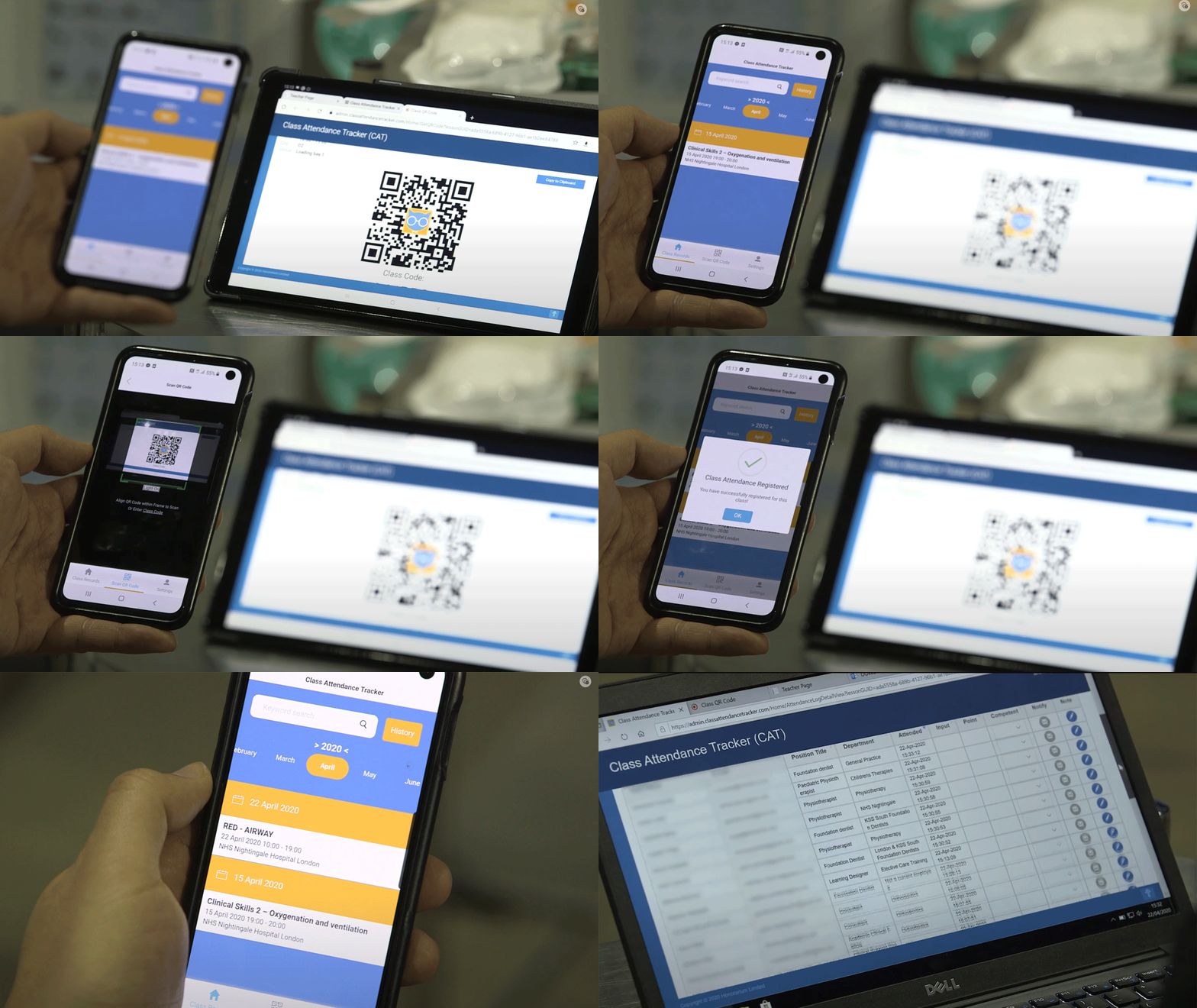
CATQR mobile app scanning a class QR code with the attendance record showing immediately on the app and administrator analytics.
6. Geolocation — Additional Assurance for Online and Off‑Site Teaching
CATQR introduced an optional geolocation feature following a request from another university. QMUL IoD quickly recognised its value.
How It Works
When enabled:
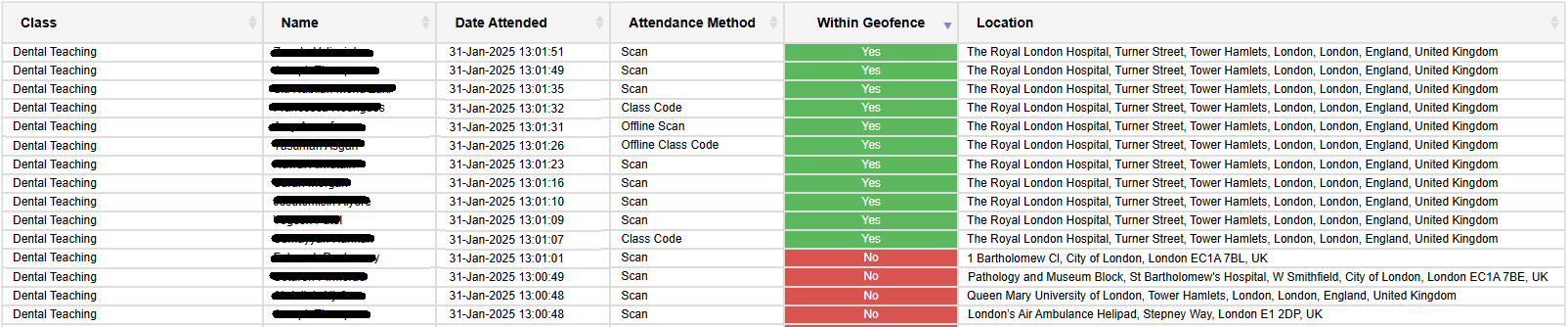
- When the student scans, their device automatically captures the precise Google Maps address exactly as displayed on Google Maps, along with the corresponding latitude and longitude.
- only with the student’s permission
- no tracking before or after the scan
- administrators can define a geofence radius
Why QMUL IoD Uses It
QMUL IoD found geolocation particularly useful for:
- online lectures delivered via Teams or Zoom, where the University must confirm whether students were:
- on campus
- within the UK
- overseas
- UK Visas & Immigration (UKVI) compliance, requiring evidence of physical location
- off‑site clinical placements, where students are dispersed across NHS sites and other settings
- specialist teaching spaces, such as simulation labs and clinical skills suites
This feature gives QMUL IoD a unified attendance system across on‑campus, clinical, and online teaching environments.
Screenshot from CAT Organiser back-end Geolocation Analytics (real attendance data; student names redacted for privacy):
7. Institutional Fit: Why CATQR Works for QMUL IoD
Regulatory and Professional Requirements
Dental programmes require:
- strict attendance monitoring
- professionalism tracking
- audit‑ready evidence for clinical exposure
- compliance with UK Visas & Immigration (UKVI) for international students
CATQR supports all of these requirements.
Data Integration
CATQR’s structured data feeds directly into:
- the University’s data warehouse
- student support systems
- engagement monitoring dashboards
This supports early intervention, regulatory reporting, and academic governance.
8. Outcomes
For QMUL IoD
- Reliable, fraud‑proof attendance data
- Scalable system supporting tens of thousands of classes
- Unified approach across clinical, on‑campus, and online teaching
- Stronger UK Visas & Immigration (UKVI) and regulatory compliance
- Reduced administrative burden
- Improved student support through accurate engagement data
For Educators
- QR codes are automatically issued one week before the class begins
- No manual setup required
- Simple, consistent process across all teaching types
For Students
- Fast, contactless attendance
- Clear expectations
- Consistent experience across all teaching environments

Video Production from JJ Hunt. During the UK lock-down in 2020, CATQR was selected by the NHS to monitor induction and simulation training in real-time for thousands of staff and volunteers at London’s ExCeL Centre and O2 Arena.

CATQR Now Available on the UK Government's G-Cloud Digital Marketplace. Click here to find out more.

“It’s great to see the reaction of staff when they use CAT and realise how simple it is to record their attendance – just by scanning a class QR code. Our administrators love it because there is no more manual data entry and spreadsheets to deal with, doing away with all the headaches that come with paper registers!”
Read the Barts Health NHS Trust Case Study
Anthony Dowding
Head of Training Resources and Development, Barts Health NHS Trust, UK

“Fantastic and easy to use! I needed a contactless solution for taking attendance at our small private school when students arrive and leave. We were able to easily purpose CAT to accomplish this and signing in/out of school for teachers and students has never been easier or quicker. Even beyond COVID, we will continue to use this system.”
Read the Score Academy Florida Case Study
C. LeAnn Elder
Head of School, Score Academy Florida, USA

“Having Class Attendance Tracker (CAT) QR has now revolutionised the way our GP registrars (trainees) register their attendance at our teaching sessions, and this would have been an impossible task with our switch to virtual teaching! CAT has made what was previously a clunky administrative process into a simple, streamlined one.”
Read the St Helier GPVTS Case Study
Dr Ravi Seyan
Programme Director, St Helier GP Vocational Training Scheme (GPVTS), UK
"Since the launch of the CAT, our process for recording and reporting attendances has improved immensely. We can easily keep track of our staff and students who can see their CAT attendance record in real-time on our learning portal, it is simple yet elegant. Customer support is excellent and enhancements are implemented quickly."
Read the Lewisham and Greenwich NHS Trust Case Study
Alberta Ansong
Digital Learning Lead, Lewisham and Greenwich NHS Trust, UK

